The National Adult Day Services Association (NADSA) recognizes three core categories of adult day care — social, medical, and specialized — with a fourth "hybrid" category (PACE) that combines adult day with primary care. Each has different staffing, cost structures, and eligibility requirements.
Quick Comparison
1. Social Adult Day Care
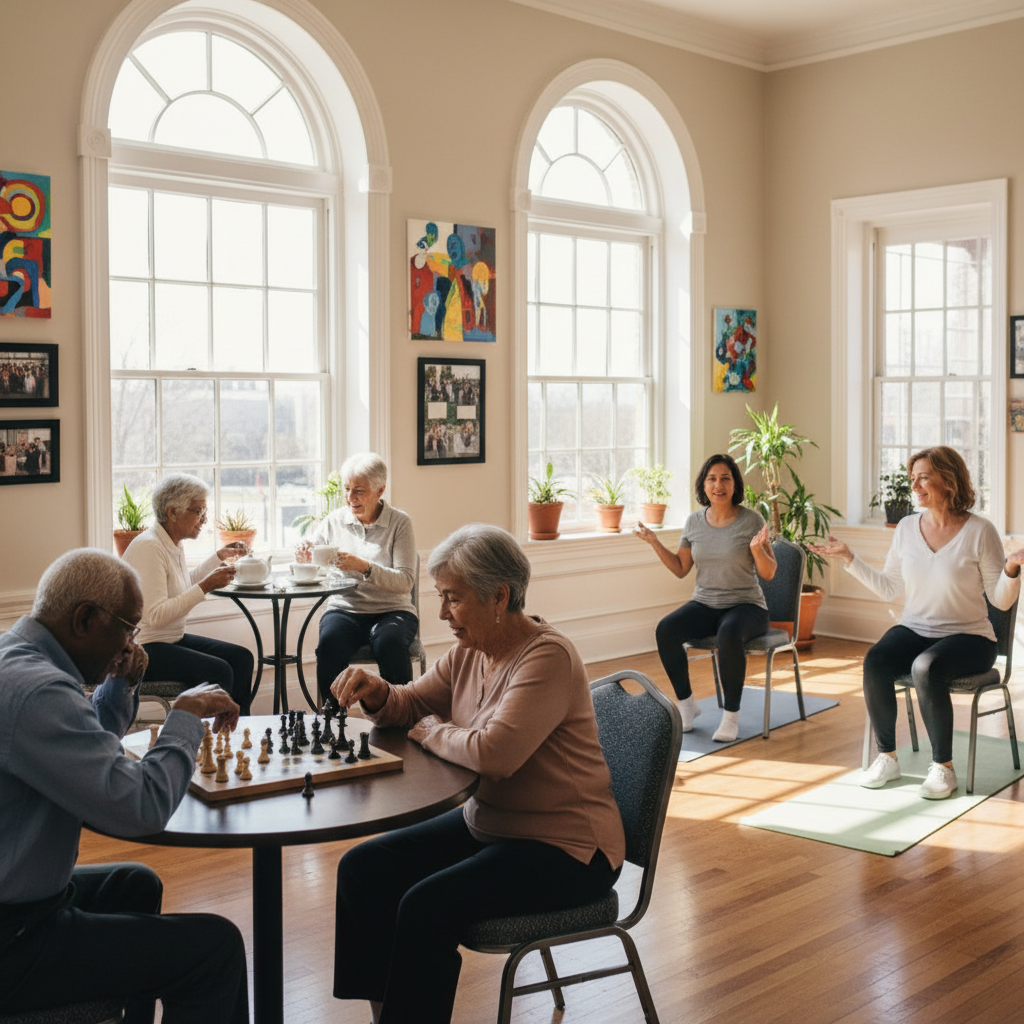
Social adult day care focuses on engagement, companionship, and supervision — not medical treatment. These centers run like a senior community center with a structured schedule: group activities, meals, music, crafts, outings, light exercise, and rest periods. Staff are trained in basic senior care but are not typically licensed nurses.
Social programs are the best fit for older adults who are generally healthy but lonely, mildly cognitively impaired, or who cannot be left alone safely. They're also the most affordable option, averaging $50–$100 per day nationally.
Typical Services at a Social ADC Center
- Supervised group activities (games, music, arts)
- Two meals and snacks (breakfast optional, lunch included)
- Basic personal care (help with toileting, walking)
- Transportation to/from the center (often optional add-on)
- Medication reminders (not administration)
- Exercise programs and light physical activity
2. Adult Day Health Care (Medical Model)
Adult Day Health Care (ADHC), sometimes called the "medical model," adds a clinical layer to the social model. These centers employ registered nurses, licensed practical nurses, physical/occupational/speech therapists, and sometimes on-site physicians or psychiatrists. ADHC is the primary adult day format covered by Medicaid HCBS waivers and the VA.
ADHC is appropriate for seniors managing chronic conditions like diabetes, congestive heart failure, COPD, or stroke recovery — anyone who needs ongoing clinical monitoring but still lives at home. The cost averages $75–$150 per day, reflecting higher staffing and licensing requirements.
What ADHC Adds Beyond Social ADC
- Medication administration by licensed nurses
- Vital signs monitoring (BP, glucose, weight)
- Physical, occupational, and speech therapy on-site
- Wound care and skilled nursing assessments
- Incontinence management and personal hygiene assistance
- Care coordination with primary physicians and specialists
3. Specialized Adult Day Programs
Specialized adult day care serves populations with unique needs that general programs can't safely handle. The two largest specialized categories are dementia/memory care and veteran-focused programs.
Dementia & Memory Care Day Programs
Memory care day programs use trained staff, secured environments, and structured cognitive therapies (like music therapy, reminiscence, and sensory stimulation) to serve people living with Alzheimer's disease, Lewy body dementia, vascular dementia, and frontotemporal dementia. Many operate as a wing or "neighborhood" within a larger ADHC center.
Dementia day programs are typically the most expensive category — $90 to $175 per day — due to higher staff-to-participant ratios (often 1:4 or better) and physical security features like wander alarms and locked exterior doors.
Veteran-Specific Adult Day Programs
VA medical centers and contracted community partners operate Adult Day Health Care programs specifically for enrolled veterans. These programs are tailored to veteran populations with higher rates of PTSD, Agent Orange exposure, traumatic brain injury, and combat-related disabilities. Cost to the veteran ranges from free to small copays based on VA priority group.
Other specialized formats include programs for people with developmental disabilities, severe mental illness, traumatic brain injury, and behavioral health conditions. Availability varies dramatically by region.
4. PACE – Program of All-Inclusive Care for the Elderly
PACE is a category of its own. It combines adult day health care with primary medical care, prescriptions, therapy, transportation, and even end-of-life care — all coordinated from a single PACE center that functions as a one-stop care hub. Participants must be 55 or older, certified as needing nursing-home-level care, and living in a PACE service area.
PACE is funded jointly by Medicare and Medicaid. For dual-eligible seniors, it is fully covered with no copays or deductibles. Participants typically attend the PACE center 2–5 days per week for clinical visits, therapy, meals, and socialization, then return home each evening.
There are approximately 150 PACE programs across 32 states. If your loved one qualifies, PACE is frequently the most comprehensive and cost-effective option — but it requires giving up outside providers and using only the PACE team's doctors and therapists.
Which Type of Adult Day Care Fits Your Family?
A free senior care advisor can assess needs, compare local programs, and confirm which type matches your budget and care requirements.
Get Free Program AdvicePowered by A Place for Mom · Available in all 50 states
Next: See the full Adult Day Care Cost Guide or learn about coverage options.